An average hoodie weighs between 16 to 25 ounces (450–700g).
The exact weight depends on the fabric type, the size of the hoodie, and design details like zippers, linings, or pockets. Lightweight hoodies are great for layering, while heavier options are better for warmth in colder weather.
How much does an average hoodie weigh?
When choosing the right hoodie, weight plays a bigger role than most people realize. Whether you’re packing for travel, designing custom merch, or simply shopping for comfort, knowing how much a hoodie weighs helps you make smarter choices.
So, how much does a hoodie weigh?
Most hoodies weigh between 12 oz and 26 oz (340g to 740g) depending on material, size, and design. Lightweight options start at around 10 oz, while oversized, heavyweight styles can reach up to 30 oz.
Why Is It Important to Know the Hoodie’s Weight?
Hoodie weight plays a critical role across the entire product lifecycle, from consumer experience to brand success and manufacturing efficiency. Measured in grams per square meter (GSM), weight reflects the thickness, density, and material quality of the fabric. Understanding its importance is key for consumers, startups, and manufacturers alike.

For Individual Consumers: Matching Needs to Experience
Usability across seasons and scenarios depends on weight. If you don’t understand hoodie weight, you may end up buying a hoodie that’s too heavy for commuting and too light for hiking, leading to dissatisfaction.
Comfort and durability go hand in hand with weight. Lighter fabrics are generally softer and more flexible, making them ideal for those who value comfort while exercising. Heavier fabrics, on the other hand, tend to be more durable, less prone to pilling, and last longer. Mismatched weights can lead to discomfort: a hoodie that’s too heavy may feel restrictive during exercise, while one that’s too light may wear out quickly.
Value perception is based on weight. Consumers often perceive higher GSM as better quality, as heavier fabrics typically require more material and a more elaborate manufacturing process. Knowing the weight helps them assess whether the price of a hoodie is in line with the quality of its materials, and avoid overpaying for a product that doesn’t live up to their durability or performance expectations.
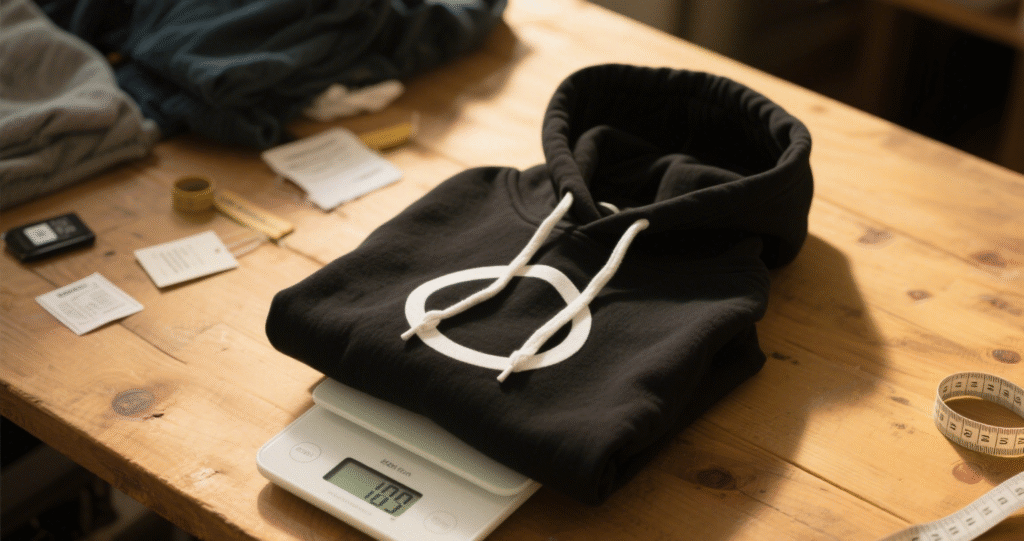
Common Types of Hoodies and Their Weights
Comparison of different hoodie weights
| Type of Hoodie | Average Weight (oz) |
|---|---|
| Lightweight Hoodie | 10–14 oz |
| Midweight Hoodie | 16–20 oz |
| Heavyweight Hoodie | 22–26 oz |
| Zip-Up Hoodie | 16–22 oz |
| Pullover Hoodie | 14–24 oz |
| Oversized Hoodie | 24–30 oz |
What Factors Affect Hoodie Weight?
Several factors determine how much a hoodie weighs. Understanding these can help you choose the right one for your needs:
Hoodie Weight by Material
| Material | Average Weight | Best For |
|---|---|---|
| 100% Cotton | 20–28 oz (570–800g) | Cool weather, casual use |
| Cotton Blend | 16–24 oz (450–680g) | Everyday wear, flexible |
| Polyester | 14–22 oz (400–620g) | Activewear, quick drying |
| Fleece | 22–32 oz (620–900g) | Cold climates, winter use |
- 100% Cotton — heavier, soft, breathable, excellent for casual and colder environments.
- Cotton-Polyester Blends — lighter, more flexible, good for all-season wear.
- Polyester — lightweight, moisture-wicking, perfect for sports or activewear.
- Fleece — thick, warm, designed for winter use.
Hoodie Weight by Fabric GSM (Grams per Square Meter)
GSM tells you how dense and thick the fabric is:
- 160–220 GSM: Lightweight hoodies (great for layering or cool summer nights)
- 220–280 GSM: Mid-weight (perfect for daily wear)
- 280+ GSM: Heavyweight (best for cold weather)
Hoodie Weight by Brand Variations
Different brands use slightly varied fabric blends or stitching methods, affecting final weight. Some may use thicker fabrics for premium feel, while others opt for lightweight blends for an athletic look.
If you want to try out a variety of hoodies, then Sumkclothing is the ideal choice for you. They are a clothing customization factory that can design and produce different hoodies according to your ideas and requirements. Contact them for more information.

How Do Hoodie Features & Add-Ons Affect Weight?
- Zippers: Full-zip hoodies weigh more than pullovers because of the extra material and hardware. Metal zippers are heavier than plastic ones.
- Front Pockets & Kangaroo Pouches: Additional fabric layers increase weight.
- Drawstrings and Toggles: While small, these features add minor bulk to the hoodie.
- Graphics and Embellishments: Screenprints, patches, embroidery, and vinyl designs contribute extra weight.
How Does Size and Fit Impact Hoodie Weight?
Larger hoodies require more fabric and are therefore heavier. This means that an XL will always weigh more than a Medium, even if the same model is the same. Also, the fit can affect weight:
- Oversized hoodies: Heavier due to extra fabric.
- Slim-fit hoodies: Lighter, as they use less material.
Frequently Asked Questions
Most adult hoodies weigh between 1 to 2.5 pounds (16 to 40 ounces). Lightweight hoodies start around 1 pound, while thick, heavyweight styles can weigh over 2 pounds depending on size and fabric density (measured in GSM or oz).
On average, a hoodie weighs between 0.5 kg to 1.2 kg. Lightweight cotton hoodies are closer to 0.5–0.7 kg, while heavy fleece or premium oversized hoodies may reach 1 kg or more.
A men’s XL hoodie typically weighs 24 to 32 ounces (1.5 to 2 pounds), depending on the fabric thickness and whether it’s lightweight or heavyweight fleece. Premium heavyweight hoodies in XL can reach up to 36 ounces (2.25 pounds).